
Before the Tribute!

The Silent Weight Of Legacy and the Art of the Unfinished Life.
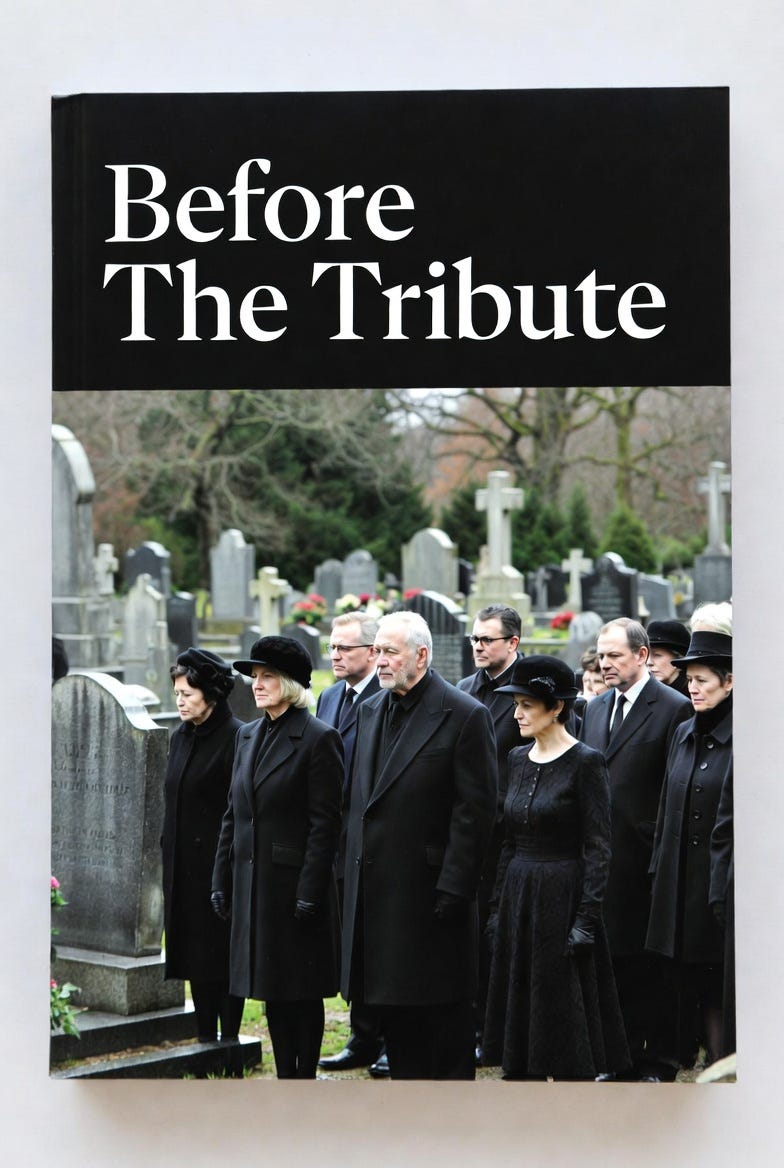
By tradition, we save our finest words for the silence of the cemetery. We gather in starched black suits and somber veils, clutching programs printed on heavy cardstock, to recite the virtues of a person who can no longer hear us. We speak of their kindness, their resilience, and their quiet impact on the world. But there is a profound tragedy in the eulogy: it is a gift delivered to a closed door.
The human experience is often defined by a strange emotional delay. We withhold our deepest affirmations and our most vulnerable displays of love until the recipient is beyond the reach of our voice. This is the story of the life of a man—not a specific man, but the archetype of the father, the brother, the friend, and the neighbor—and the love we fail to offer him while his heart is still beating.
1. Complex Life
To look at a man in his middle years is to look at a map of unspoken compromises. Life is rarely a linear progression of triumphs; it is a dense, tangled thicket of responsibilities, anxieties, and small, silent victories. The modern man often navigates a labyrinthine existence, balancing the ancient expectation of being a "provider" with the shifting tides of a world that demands emotional fluency he was perhaps never taught.
A man’s life is complex because it is lived in the shadows of expectation. He moves through his days managing the friction of a career, the delicate architecture of a marriage, and the internal struggle to define his own worth. We see the exterior—the stoic face, the tired eyes, the routine—but we rarely acknowledge the internal complexity. We assume he knows he is loved, and so we leave the words unsaid, allowing the complexity of his struggle to go unvalidated.
2. Death is Easy, Life is Hard
There is a romanticism often attached to the end of a life, a "peace" that we claim the departed has found. In truth, death is the easy part—it is the cessation of conflict. It is life that is grueling. Life requires the daily courage to wake up and face a world that is often indifferent to one’s suffering.
For a man, the hardness of life is often compounded by a societal "code of silence." He is taught that to complain is to fail, and to show exhaustion is to be weak. He carries the weight of his world on his shoulders, often without a harness. When we stand at a funeral and say, "He was a pillar of strength," we are acknowledging the burden he carried, but we are doing so only after he has finally been allowed to put it down. The time to support the pillar is while the roof is still pressing down on it, while he was still breathing.
3. What Happens When We Die
Theologically and scientifically, the debate over the afterlife continues. But socially and emotionally, we know exactly what happens when we die: we become perfect, and we rest from the trials of life.
The moment a man draws his last breath, his flaws begin to evaporate in the collective memory of his survivors. The grumpiness is reframed as "character," the absences are forgiven as "hard work," and the mistakes are buried with the casket. We grant the dead a grace we never afforded the living. We finally offer them the unconditional love and total forgiveness they spent a lifetime yearning for. We celebrate the "idea" of the man, while the messy, breathing, flawed reality of him was often met with criticism or indifference.
4. Death is Certain
There is no "if" regarding the end; there is only "when." This certainty is the one absolute truth of the human condition, yet we live as though we have a special dispensation from mortality. We treat death as a distant rumor, an event that happens to others but will wait for us to be "ready."
Because death is certain, our procrastination of affection is illogical. We act as though there will always be a better time—a "perfect" moment—to tell a father he is appreciated or a friend that he is vital. We wait for anniversaries, birthdays, or milestone achievements to express love. But the clock does not care about milestones. The certainty of death should be the primary catalyst for the immediacy of love.
We shouldn't wait for Death to show us how beautiful life should be, we shouldn't.
5. Tomorrow Isn't Promised
The cruelest trick of the human mind is the assumption of "tomorrow." We leave conversations unfinished, apologies unmade, and gratitude unexpressed because we believe the sun will always rise on a new opportunity to make amends.
Every man who has ever died had a "tomorrow" planned. He had a bill he intended to pay, a trip he wanted to take, or a phone call he planned to return. When we postpone love, we are gambling with a currency we do not own. The "tribute" we plan to give someday is a hollow promise. The only time that actually exists is the narrow, flickering window of now.
6. Give Me My Flowers
There is an old saying in the community: "Give me my flowers while I can still smell them." It is a plea for recognition while the senses are intact. A bouquet on a grave is a beautiful gesture, but it serves the living, not the dead. It eases the guilt of the survivor; it does nothing for the spirit of the departed.
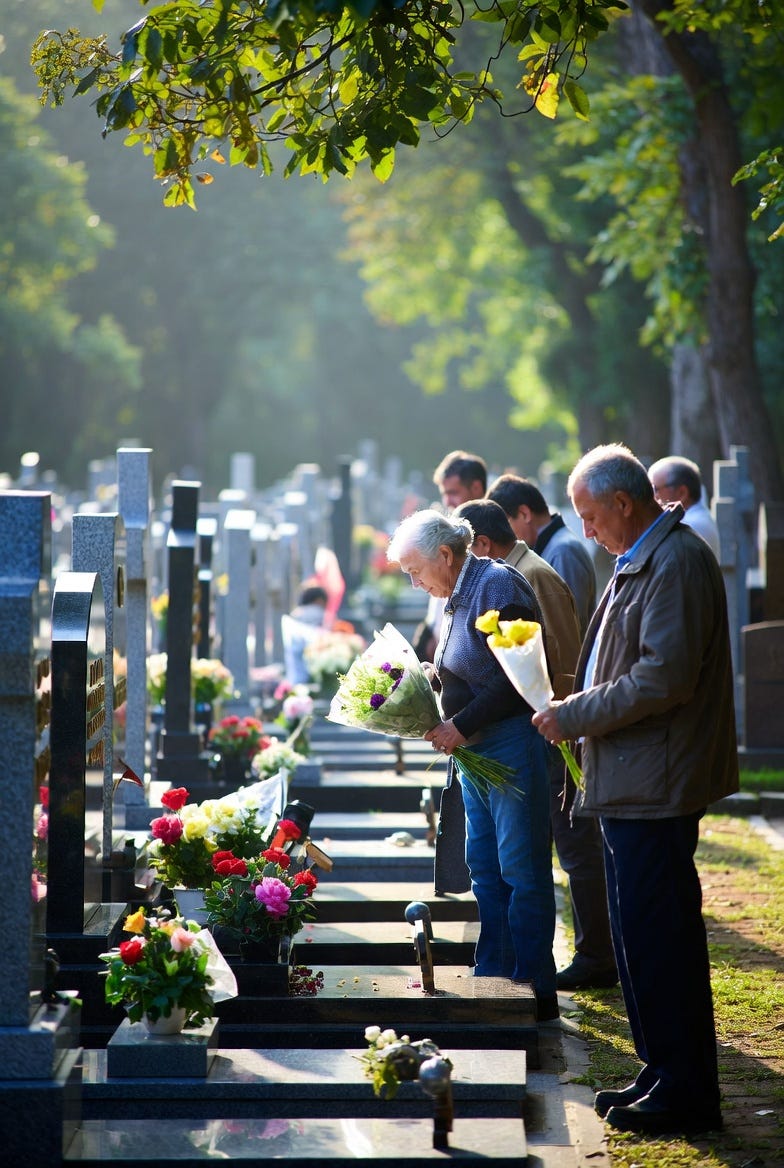
To give a man his "flowers" is to acknowledge his value in real-time. it is the unsolicited "I’m proud of you." It is the hand on the shoulder that says, "I see how hard you are working." It is the invitation to speak his truth without judgment. We must move away from the culture of the posthumous praise and towards a culture of living appreciation.
A man should not have to die to find out how much he was needed, He is Dead, He will never know.
7. Alone, Miserable, and Bewildered
Behind the facade of many "successful" or "steady" men lies a profound sense of isolation. We live in an era of hyper-connectivity, yet many men feel more alone than ever. They navigate the crises of aging, the loss of purpose, and the fear of inadequacy in a vacuum.
When we wait until the funeral to express our love, we ignore the years that man may have spent feeling miserable and bewildered by the demands of his life. We see the "strong, silent type" and assume he is content in his silence. Often, that silence is a prison. He is bewildered by a world that seems to value what he does rather than who he is. If we wait until the tribute to tell his story, we have left him to walk the hardest miles of his journey in solitude.
8. If the Walls Could Talk
If the walls of a man’s home or heart could talk, they would speak of the sighs he exhales when no one is watching. They would tell of the nights spent staring at the ceiling, wondering if he has done enough. They would speak of the moments he wanted to cry but swallowed the tears to keep the peace.
These walls witness the love he pours into the world, often through acts of service that go unnoticed—the car he fixed, the lawn he mowed, the extra shift he took. If we could hear what those walls hear, we would be humbled. We would realize that the man we take for granted is a hero of the mundane, fighting battles we haven't even bothered to ask about.
Every man should have a companion of brothers, that he could speak to every once in a while about everything, life is not mearnt to be done alone.
Conclusion: The Living Tribute
The "tribute" should not be a speech delivered at a podium to a room full of weeping relatives. The true tribute is the love we weave into the daily fabric of a man’s life. It is the decision to see him, to hear him, and to forgive him while he is still here to witness it.
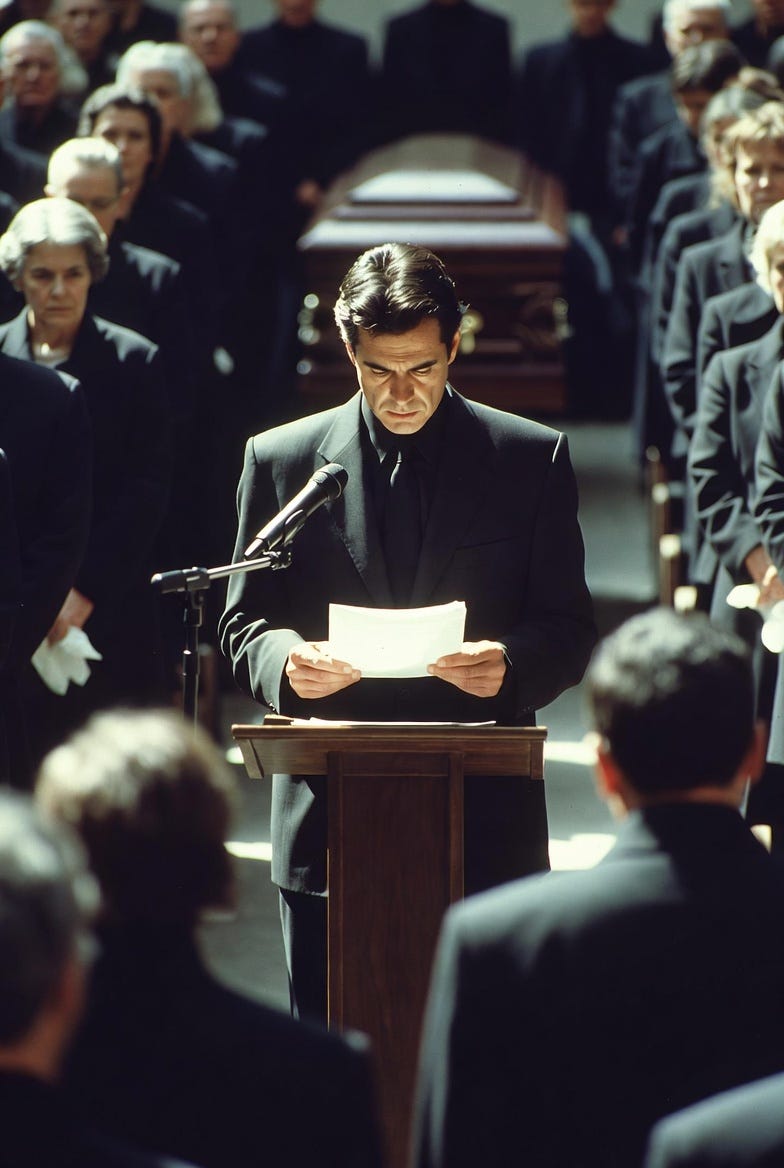
Let us not be a people who save our best poetry for the cemetery. Let us be a people who find the courage to be vulnerable with the living. If there is a man in your life who has carried a weight, who has provided a foundation, or who has simply existed in the periphery of your world—tell him now. Don't wait for the flowers, the black suits, or the heavy cardstock. Give him the love he deserves before the tribute begins. Give him his flowers while he can still smell them.
Give him “before the tribute”
I have never liked the phrase "speak nothing but good of the dead." Not because the deceased didn't deserve it, but because we all have our good and bad sides,polarity is what makes us whole. If we only celebrate the good on that day, we are taking away a part of that person's identity. The problem with men is that no one ever taught them that their feelings matter. That their actions matter, and that their presence and provision are what we truly need. If they were more open with their partners,who are supposed to have their backs and be their support,a text like this wouldn't be necessary as a reality of both the present and the past
I really loved reading this. I loved how you said, allow me to paraphrase, that emotionally we all know that death is when suddenly one becomes perfect. Like wow, it couldn’t have been written any better. If we go with the notion that the dead person is perfect then they definitely should get their flowers when they’re still alive and not wait you recognize them after their death. Honestly, Lawrence l loved this article. I just subbed. I hope to see more of your work